Orthodontic Care for Pre-Teens
At Swords Orthodontics, many of our patients begin their orthodontic treatment, or the main part of their orthodontic treatment, what we’d call 'definitive treatment,' during the pre-teen years of 9-12.
Some of these patients first come to us for assessment at this age because they have been referred by their dentist, or they have noticed something about their teeth that they think should be different.
At Swords Orthodontics, we don’t need you to have a referral from your dentist to attend us, you can just get in touch with us directly, and we can organise things with your dentist as required.
Other patients starting treatment as pre-teen children originally came to us at a younger age, which we strongly recommend, and might have had some early treatment for specific problems – what we’d call 'interceptive orthodontic treatment.'
Why the Pre-Teen Years?
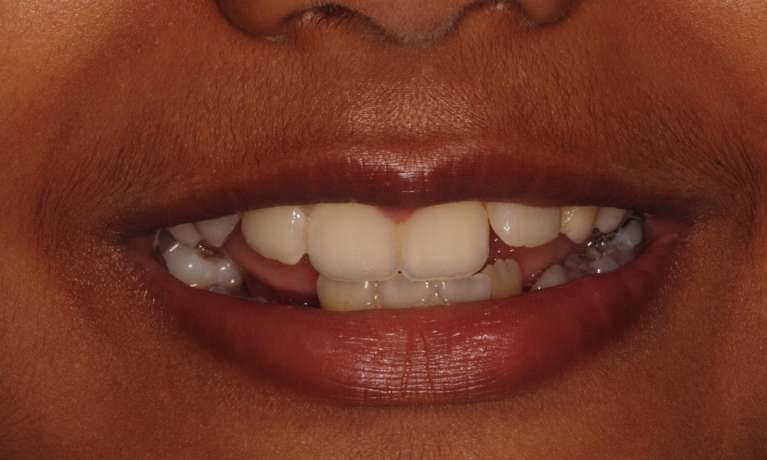
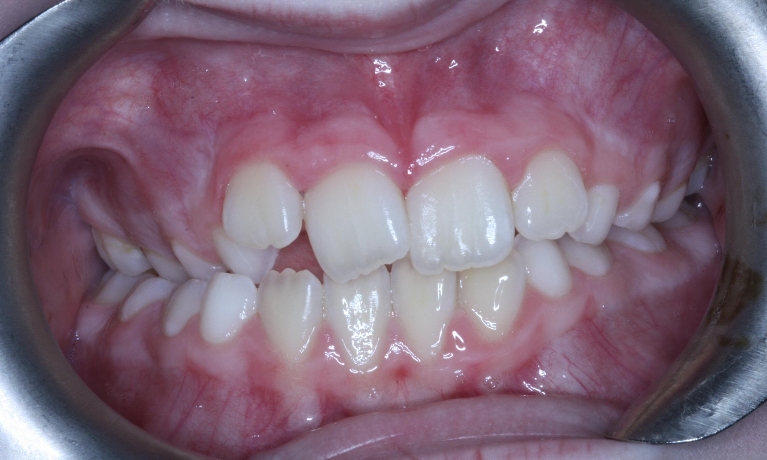
In many cases, a need for orthodontic treatment is established early on. We may notice that the permanent teeth are coming in crooked, there isn’t enough space for them, they are in the wrong position, or we might see apparent problems with the development of the jaws and the way that the teeth meet.
This is a time in a child’s physical development when many changes are beginning to take place. Growth spurts start to happen, and major changes are also happening in the mouth.
By the age of twelve, most of the permanent teeth have come in, and the 12-year molars may have also made their appearance. In some cases, we will want to treat before these molars show up to prevent further crowding and more extended future treatment.
Thanks to your child’s higher metabolism rate, improvements made with braces start to happen faster and are even more comfortable, allowing for a shorter treatment time with impressive results.
The pre-teen and early teenage years are often a great time for using functional braces, such as the versatile “Twin Block” brace, which is very effective at rapidly improving problems involving overjets (where the top teeth stick out too much). It’s also an excellent time to treat problems with overbites (where the top and bottom teeth overlap wrongly).
Social Aspects of Wearing Braces
One of the most important considerations during the pre-teen years is the challenge that children this age often feel when it comes to fitting in with their peers. At Swords Orthodontics, we take this seriously and feel that your child’s emotional development is just as important as their physical development.
If your child is getting braces at this age, you can discuss some of these talking points with him or her, and we’ll be happy to back you up and offer suitable encouragement:
- Many of their friends or other kids at school either already have braces or will be getting braces soon.
- Braces aren’t forever, and they’ll have a beautiful smile when the treatment is done.
- Clear braces are an option if they’re really concerned.
Caring for Braces as a Pre-Teen
Kids in the pre-teen age range can vary considerably in their level of maturity. Some kids adapt well to the responsibility that comes along with braces while others struggle with it. We will keep your child’s level of development in mind when deciding on the appropriate time for orthodontic treatment.
Parents have a part to play in orthodontic treatment for their child, and they can help by:
- Making sure that their kids are cleaning their teeth appropriately while wearing braces
- Making sure that any removable braces are more often in the mouth than out
- Working with their kids to help them understand why certain foods shouldn’t be eaten with braces, although sometimes it does take a broken wire for the message to really sink in!
- Working with their kids to help them understand why things that aren’t food shouldn’t be eaten at all – pens, buttons, zips, Lego…and more!
Kids in this age group do respond well to positive reinforcement and rewards for good behaviour. Supervise your child during brushing and flossing and give reminders, compliments and rewards to encourage good habits. As your child establishes good habits, increase their level of responsibility.
If it’s time to talk about orthodontics for your pre-teen child, we know how to put them at ease and explain things, so give Swords Orthodontics a call today (01 810 7622) to meet Dr Murray and his team – we’d be delighted to see you!
Frequently Asked Questions
Orthodontics is a type of dentistry that deals with the alignment and positions of the teeth, the way the teeth meet, and the development of the teeth and jaws.
Well, orthodontics would benefit just about anyone who would like their smile improved.
The problem may be the alignment of their teeth, the position of their jaws, or the way their teeth meet, and orthodontics can be used to improve these things for them.
If there is some reason you aren’t happy with the appearance of your smile, then chances are that an orthodontist can help you and your dentist get a great smile for you.
Sometimes there are also functional problems with how the teeth meet, and although you may be happy with your smile now, the repeated abnormal function of your teeth and jaws may lead to problems later on – particularly with abnormal tooth wear.
Many people come to see us at Swords Orthodontics because of things like:
- Crowded teeth
- Gaps between teeth
- Teeth in the wrong position
- Twisted teeth
- Teeth that stick out too much (big “overjet”)
- Lower teeth biting in front of the upper teeth (“crossbite”)
- Teeth that overlap too much (deep “overbite”)
- Teeth that don’t meet together smoothly (“displacements”)
- Teeth that don’t meet together at all (“open bites”)
…and several others. If any of these things seem to affect you, perhaps we can help if you get in touch with us. You can call us on 01 810 7622 – you can even use Skype if you like.
That depends on a few different things; different orthodontic problems are best treated at different ages. Sometimes we get the best results by treating young patients as the teeth come through into the mouth, sometimes during a growth spurt, and sometimes we want to treat when a patient has completed most of their growth. We can give you the information you need to make a decision about treatment when we carry out an orthodontic examination and assessment, but the earlier you come to see us, usually the more options we have.
No. Well, not while we are at work, anyway.
Swords Orthodontics is a specialist practice and just concentrates on orthodontics. We have the entire practice set up to examine, diagnose, and treat orthodontic problems, so even though our orthodontists are fully qualified to do other areas of dentistry like implants, dentures, crowns, fillings, extractions, or tooth whitening, they don’t. That’s why our orthodontic treatment is gentle, effective, and up to date.
Incidentally, if you are interested in tooth whitening, there have recently been some changes in the laws regarding it, so please do go to a registered dentist to discuss the correct approach for you.
Every orthodontist is also fully qualified as a dentist, but not every dentist is an orthodontist. In fact most of them are not.
Although the law permits dentists to practice any area of dentistry that they like, including orthodontics, a dentist can only describe themselves as an orthodontist if they are registered on the orthodontic specialist list of the Dental Council of Ireland. This typically means that they:
- Are fully qualified as a dentist
- Are registered on the Dental Council’s register of dentists
- Completed at least 3 years of full-time post-graduate study and training exclusively in orthodontics at an institution that is approved by the Dental Council for orthodontic training
- Usually did research into orthodontics
- Were examined by an approved university and awarded a Master’s degree
- Then were further examined by a Royal College of Surgeons (or its equivalent abroad)
-
Were finally approved by the Dental Council for inclusion on the Orthodontic Division of its Register of Specialists
Meet Our Doctor:
Dr. Stephen Murray
BSc BDS FDS RCSEng MSc MOrth RCSEdin
Specialist Orthodontist
Dr Stephen Murray is the principal orthodontist at Swords Orthodontics.
Originally graduating in Dentistry (BDS) from Queen’s University Belfast, Stephen enjoyed oral surgery, and he became a Fellow of the Dental Surgery faculty at the Royal College of Surgeons of England (FDSRCSEng) in 1995.
In 1999, he was awarded a Master’s degree (MSc) in Orthodontics from the University of Newcastle upon Tyne and became a Member of the Royal College of Surgeons of Edinburgh (MOrthRCSEdin) in 2000. He also has a first class honours degree in Biochemistry (BSc).He is registered ...
Featured Blog Posts - Orthodontic Care for Pre-Teens
Halloween and Brace care
With Halloween just over two weeks away it’s very important not to forget your oral hygiene and brace care. For children with a brace or dental appliance I’m sure all they are thinking about right now is what costume they are going to wear and how many sweets they ...
What is a Crossbite?
The two crossbites we see the most here at Swords Orthodontics are Incisor crossbites and Molar crossbites.
Incisor crossbite before

Incisor crossbite after

Is it common? The rate of anterior crossbite is 4 to 5 percent according to the Contemporary Clinical Dentistry Journal (2013)
Causes: Usually developmental, but could be as a result of trauma/injury
Presents as/What to look for: The upper front teeth (incisors) sit behind the lower front teeth
Complications: The result of an Incisor crossbite is a bad bite also referred to as malocclusion. This means the teeth are not meeting correctly and that the bite is ...
What is a Rapid Maxillary Expander?
As a dental nurse here at Swords Orthodontics, I've seen alot of young children come through our doors with their parents looking for an Orthodontic opinion about their teeth. Many of which present with a narrow upper jaw (maxilla) compared to their lower jaw (mandible). There ...