Orthodontic Care for Teenagers
A healthy, beautiful smile starts here

Orthodontic Care for Teenagers | Orthodontist
Improve your smile today – call to schedule a consultation!
Claim Now!

Orthodontic Care for Teenagers

At Swords Orthodontics, we always want to start orthodontic treatment when it is most effective, and for many patients, this is during the teenage years. That’s why orthodontics is something classically associated with teenagers, even though we treat patients from all age groups.

Getting Braces as a Teenager

Orthodontics is a very personal treatment that must be individually tailored to fit each patient. There’s no such thing as one-size-fits-all when it comes to braces. In some cases, the time to start braces is in the pre-teen years (or earlier), and in others, it’s best to wait until all the permanent teeth have come through. There are even a few problems that are best treated at the end of the teenage years when all the growth is finished.

One of the benefits of bringing your child into our office at an early age is that we have the opportunity to monitor your child’s development and choose the ideal time for braces.

If this is your teenager’s first visit to an orthodontist, we may find some problems that could have benefited from earlier correction. There’s almost always a solution to them, and we will discuss these issues with you at the time of your appointment and some of the options for solving the problems. We’ll then work with you to plan the appropriate treatment.

Braces Options for Teenagers

At Swords Orthodontics, we most often offer traditional fixed braces to our teenage patients. We know that teenagers always want to look their best, so we can arrange for them to be coloured (often that’s in favourite team colours), or we can discuss clear or tooth-coloured brackets or even near invisible treatments like Invisalign if your teenager is interested.

Invisalign Teen can treat many conditions, but there are some situations in which it’s not the most appropriate treatment. We’ll discuss your needs and goals to make sure that the treatment plan we choose is the best one for your child.

Some teenagers may be reluctant to get braces. We can help with before-and-after pictures to provide some encouragement. Does your teen have any close friends who wear braces? Pointing out celebrities who wear braces is another way to inspire your teenager – as are pictures of any celebrity with straight teeth that aren’t false since most of them that have teeth that are straight and natural probably don’t have teeth that are naturally straight!

Caring for Braces as a Teenager

Most teenagers are ready for a bit more independence, and braces can be a great way to test the waters. We’ll discuss how to care for braces and teeth with both you and your teenager to make sure both of you know what to do.

Quite often, a teenage patient knows that there is a problem with their teeth and they want the problem solved. This means that they can be quite motivated towards this - they want a great smile too.

Encourage your teenager to take care of his or her braces independently, but be prepared to step in if extra support is needed. Improper or inconsistent hygiene habits while wearing braces can have permanent repercussions, so this is something that should be monitored.

Your teenager may also feel frustrated at the idea of not being able to enjoy some of the same treats as his or her friends, especially crusty pizza and snacks like chunky chocolate, popcorn, and hard, sticky sweets. Remind your teen that he or she can eat anything desired after the braces come off and then help your teenager prepare a braces-friendly treat instead.

Orthodontic care isn’t just about eating the wrong food – chewing things that aren’t food (pens, zips, and buttons) and similar activities can mean all sorts of damage for braces.

So can doing healthy things that are normally a good thing. Certain sports can be damaging to braces (as well as teeth and the rest of the mouth) if you don’t take careful precautions like wearing a mouthguard, and we can talk about this, give you advice, and offer a range of mouthguard options too.

When Braces Come Off

People don’t come to see us because they want orthodontics; they come to see us because they want the benefit that orthodontics can give them. When the orthodontics is finished, the braces come off, and you get to enjoy your new smile. To keep things that way and stay as delighted with your smile as you were the first time you looked in a mirror after we took the braces off, you need to follow the after-treatment instructions – and the first of these is to wear your retainers.

Retainer Use – An Essential Step in Treatment

We can’t emphasise enough how important this is and how disappointed people can become if they don’t follow some straightforward and undemanding instructions. For a teenager, that determines the smile they’ll have as a young adult and beyond.

Call Swords Orthodontics today (01 810 7622) to schedule an appointment for you and your teenager to meet Dr Murray and his team. It’s an excellent opportunity for you both to learn more about orthodontics and how it can help for your teenager get a great smile to start their adult years.
 

Frequently Asked Questions

Orthodontics is a type of dentistry that deals with the alignment and positions of the teeth, the way the teeth meet, and the development of the teeth and jaws.

Well, orthodontics would benefit just about anyone who would like their smile improved.

The problem may be the alignment of their teeth, the position of their jaws, or the way their teeth meet, and orthodontics can be used to improve these things for them.

If there is some reason you aren’t happy with the appearance of your smile, then chances are that an orthodontist can help you and your dentist get a great smile for you.

Sometimes there are also functional problems with how the teeth meet, and although you may be happy with your smile now, the repeated abnormal function of your teeth and jaws may lead to problems later on – particularly with abnormal tooth wear.

Many people come to see us at Swords Orthodontics because of things like:

  • Crowded teeth
  • Gaps between teeth
  • Teeth in the wrong position
  • Twisted teeth
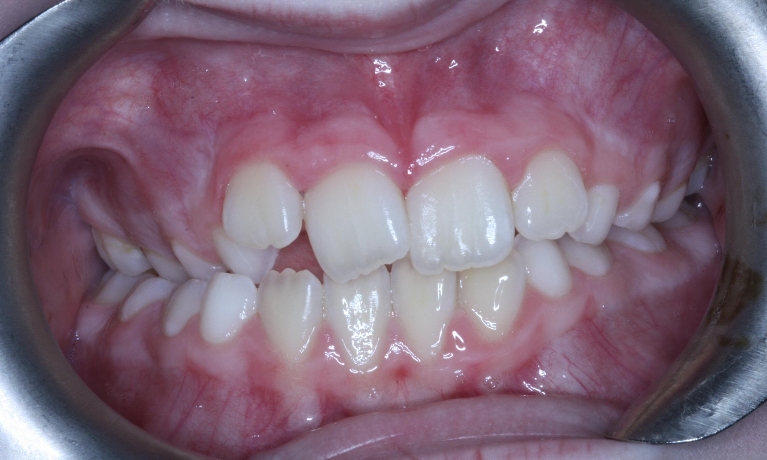
  • Teeth that stick out too much (big “overjet”)
  • Lower teeth biting in front of the upper teeth (“crossbite”)
  • Teeth that overlap too much (deep “overbite”)
  • Teeth that don’t meet together smoothly (“displacements”)
  • Teeth that don’t meet together at all (“open bites”)

…and several others. If any of these things seem to affect you, perhaps we can help if you get in touch with us. You can call us on 01 810 7622 – you can even use Skype if you like.
 

That depends on a few different things; different orthodontic problems are best treated at different ages. Sometimes we get the best results by treating young patients as the teeth come through into the mouth, sometimes during a growth spurt, and sometimes we want to treat when a patient has completed most of their growth. We can give you the information you need to make a decision about treatment when we carry out an orthodontic examination and assessment, but the earlier you come to see us, usually the more options we have.

No. Well, not while we are at work, anyway.

Swords Orthodontics is a specialist practice and just concentrates on orthodontics. We have the entire practice set up to examine, diagnose, and treat orthodontic problems, so even though our orthodontists are fully qualified to do other areas of dentistry like implants, dentures, crowns, fillings, extractions, or tooth whitening, they don’t. That’s why our orthodontic treatment is gentle, effective, and up to date.

Incidentally, if you are interested in tooth whitening, there have recently been some changes in the laws regarding it, so please do go to a registered dentist to discuss the correct approach for you.
 

Every orthodontist is also fully qualified as a dentist, but not every dentist is an orthodontist. In fact most of them are not.

Although the law permits dentists to practice any area of dentistry that they like, including orthodontics, a dentist can only describe themselves as an orthodontist if they are registered on the orthodontic specialist list of the Dental Council of Ireland. This typically means that they:

  1. Are fully qualified as a dentist
  2. Are registered on the Dental Council’s register of dentists
  3. Completed at least 3 years of full-time post-graduate study and training exclusively in orthodontics at an institution that is approved by the Dental Council for orthodontic training
  4. Usually did research into orthodontics
  5. Were examined by an approved university and awarded a Master’s degree
  6. Then were further examined by a Royal College of Surgeons (or its equivalent abroad)
  7. Were finally approved by the Dental Council for inclusion on the Orthodontic Division of its Register of Specialists
     

Meet Our Doctor:

Dr. Stephen Murray
BSc BDS FDS RCSEng MSc MOrth RCSEdin

Specialist Orthodontist


Dr Stephen Murray is the principal orthodontist at Swords Orthodontics.

Originally graduating in Dentistry (BDS) from Queen’s University Belfast, Stephen enjoyed oral surgery, and he became a Fellow of the Dental Surgery faculty at the Royal College of Surgeons of England (FDSRCSEng) in 1995.

In 1999, he was awarded a Master’s degree (MSc) in Orthodontics from the University of Newcastle upon Tyne and became a Member of the Royal College of Surgeons of Edinburgh (MOrthRCSEdin) in 2000. He also has a first class honours degree in Biochemistry (BSc).He is registered ...

Featured Blog Posts - Orthodontic Care for Teenagers

October 7, 2025

Why retainers are important

I had a patient come in this afternoon for an appointment that was marked in the diary as “retainer review”.

When I opened up his notes, it turned out that his orthodontic treatment finished over 3 years ago and we hadn’t seen him in almost 3 years. At that stage we had made him a spare retainer and he never came back to us to have it fitted.

When he came in, I said “so we haven’t seen you in nearly 3 years.”

“Yeah, I know. Sorry about that. Really busy with the leaving cert and that sort of thing,” he said. He explained that his retainer was ...

July 17, 2022

Orthodontic conversations July 2022

I had a patient with neurosensory issues in last week. We were planning to put the orthodontic braces on his teeth - we call that process "bonding" or a "bond-up".

Kid: What are you going to do to me today?

Me: Stick the braces on your teeth.

Is this going to hurt?

Me or you?

Me! Is it going to hurt me?

No, it's not going to hurt. You're going to have to have your mouth open for a while and your jaw muscles will feel a bit stretched, but it's not going to hurt. It's not like standing on Lego.

I'm immune to Lego.


Well, you can't argue with that.


May 19, 2022

Food to avoid with fixed braces on

There are many hard, crunchy, sticky and chewy food to avoid with braces on as they can cause parts of the brace to break and come off.

These foods include:

  • Hard sweets e.g Toffee, Caramels, Boiled sweets, chewing gum. Alternative option would be chocolate but let it melt in the mouth of ...
Getting an appointment is fast and easy!
Get Started!