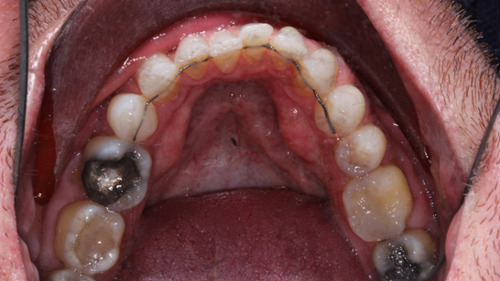
I had an enquiry about replacing a retainer for someone who was treated by another orthodontist in another town, and was asked why a replacement retainer costs so much.
Well, I guess there’s a long and short answer to that, and anyone who knows me well enough knows I’m rarely going to give a short answer but this seems like a good day to give it a go:
Basically you’re not paying for the retainer, you’re paying for the retention.
You’re paying for your orthodontic result to stay the way it was.
In other words, I’m taking responsibility for keeping those teeth straight.
Swords Ortho treatment V Somewhere Elsodontics
Keeping teeth straight after a retainer fails is straightforward enough for a Swords Orthodontics patient that I have treated, because I know how much those teeth have been moved and what the risks are for the relapse of those teeth. And I have a record of what those teeth looked like before the treatment, and at the time the braces came off and I usually have a record of what the teeth look like when I make the new retainer.
And I’ll have an idea about what happened to the retainer.
For a patient like that, if they have been wearing their retainer as they were meant to, I am literally replacing the retainer.
If they haven’t been wearing their retainer as they were meant to, I can go through their options and come up with a plan for them, which is usually – if there hasn’t been much change in the position of the teeth – to accept the teeth as they are and make a new retainer.
The New Patient
On the other hand, if I have never seen a patient before I am approaching things completely cold and uninformed and have to become acquainted with the patient, not just their orthodontic problem. And that orthodontic problem has to be in the context of their dental health and their dental health has to be in the context of their general health.
So for a retainer replacement for a patient that I haven’t dealt with, I have to treat them like any new patient seeking orthodontic treatment – a medical history, dental history, and an examination. They might not have been to a dentist for a while and it’s only the broken retainer that has made them engage with this dentist – so I wouldn’t want them to have a mouth cancer and I miss it.
After the exam, I’d need to get an idea of what their orthodontic treatment involved: what was the problem before the treatment, what was the treatment and what was the result. That’s going to give me an idea of what relapse has happened or might happen, and then I can have a look at the retainer if they still have it and get an idea of why it broke.
Most of the time, the breakage is just the passage of time for something man-made in a hostile environment.
The Records
Before I make the replacement retainer, I need to have a record of what the teeth look like. This avoids the problem of a patient noticing some detail that was there when they came in but weren’t aware of and assuming it happened because of my retIF ainer. It’s the dental equivalent of “your call will be recorded for training and quality purposes”. I almost never will need an X-ray, but I almost always will need photographs and a model of the teeth, so if anything does change I have something to look back at. In the old days the model was made in plaster of paris, nowadays it’s a virtual model from a digital scan of the teeth.
The Retainer
Most of the modern removable retainers are not able to be repaired they need to be completely replaced – that means we’ll need to make a new retainer and have a second visit to fit it.
A fixed retainer can fail in a few different ways – it might break in a way that the patient notices (that’s probably why they came in, because it’s a nuisance), it might break in ways that they don’t notice (that’s why they need an examination) and it might not break but starts to move the teeth while still being attached to them (that’s a long story for another day). If it’s a simple matter I can repair the fixed retainer on the day, but if it’s broken or distorted then it will need to be removed, the teeth will need to be prepared, a new retainer made up and then attached to the teeth. That will usually take a second visit.
Fitting the fixed retainer can be a tricky thing, as it’s important that the retainer doesn’t interfere with the way the teeth meet (and that might have been the reason that the retainer broke – so the retainer itself is more vulnerable).
I usually make a removable retainer to fit over the bonded retainer for my own patients, I can discuss the pros and cons of doing that or not for a new patient. Usually they can be made to fit immediately after we replace a fixed retainer, on the second visit but if it’s complicated then we might need a third visit (though that’s unlikely).
The Responsibility
Finally…I will stand over my work. We use quality materials and have great laboratory colleagues which, combined with our own experience and carefulness, means that we can and take responsibility for repairs and replacements due to problems arising from the materials or our workmanship for 12 months after we replace the retainer.
I don't know when you'll be reading this and I don't know what's wrong with your retainer until I see you, so you can call for an idea of current fees depending on what you will need done.